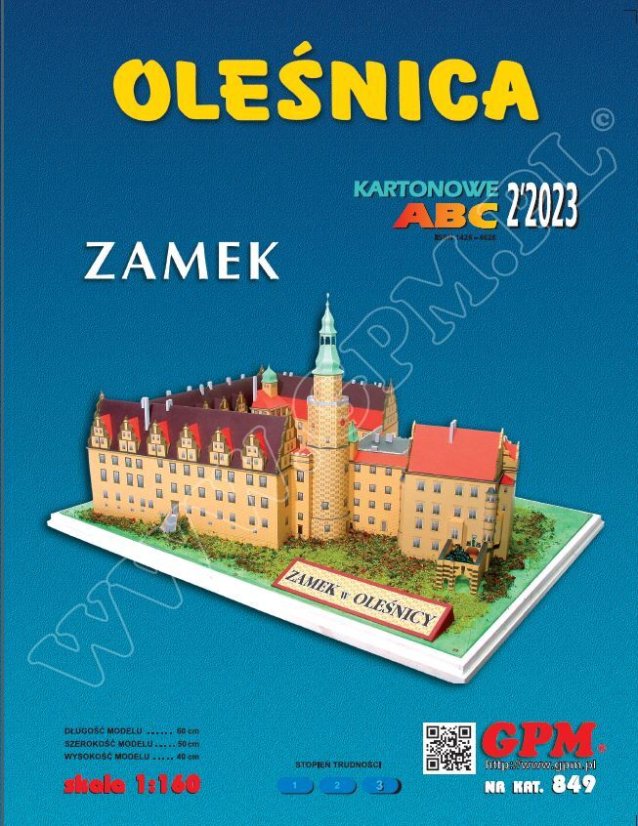
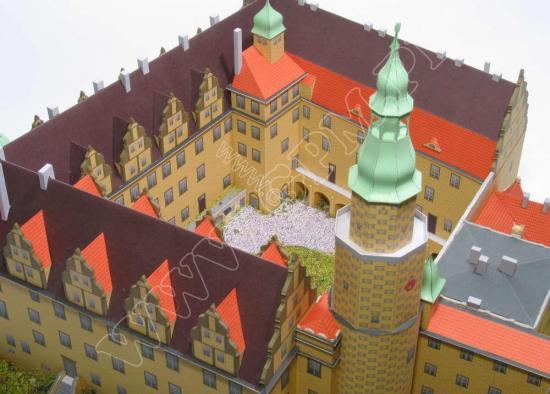
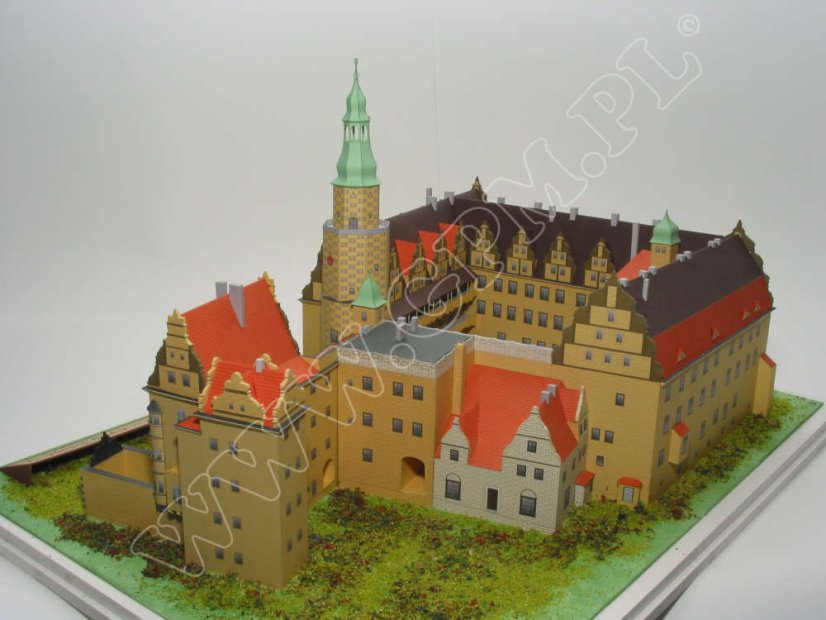
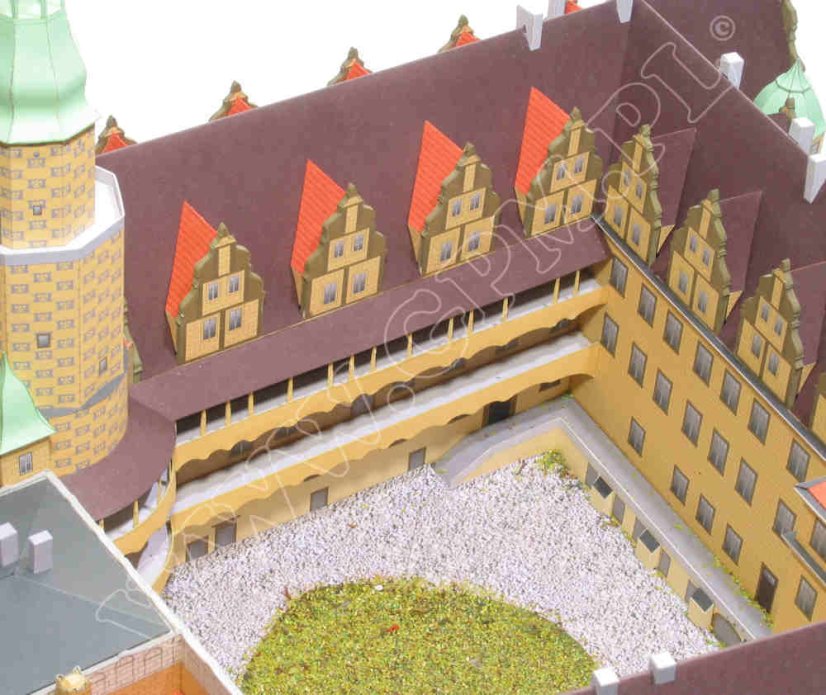
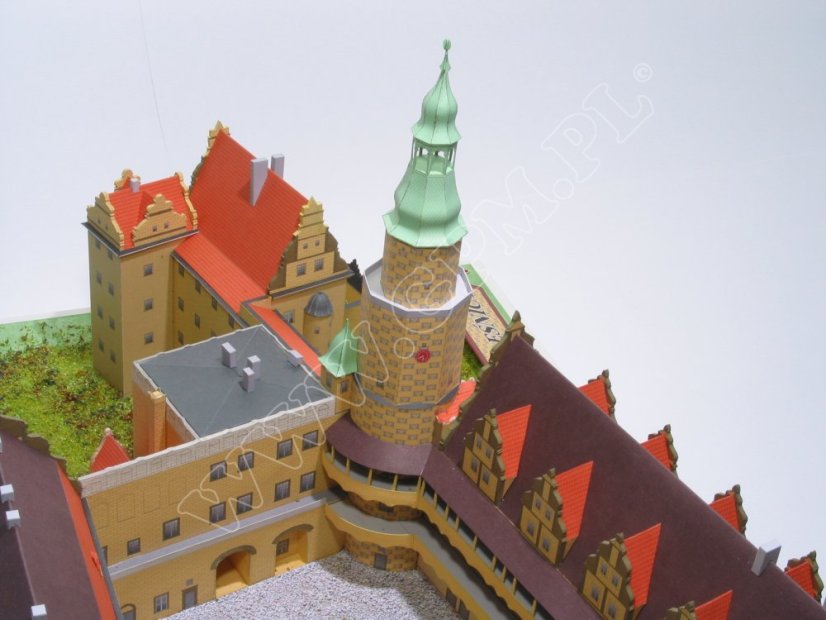
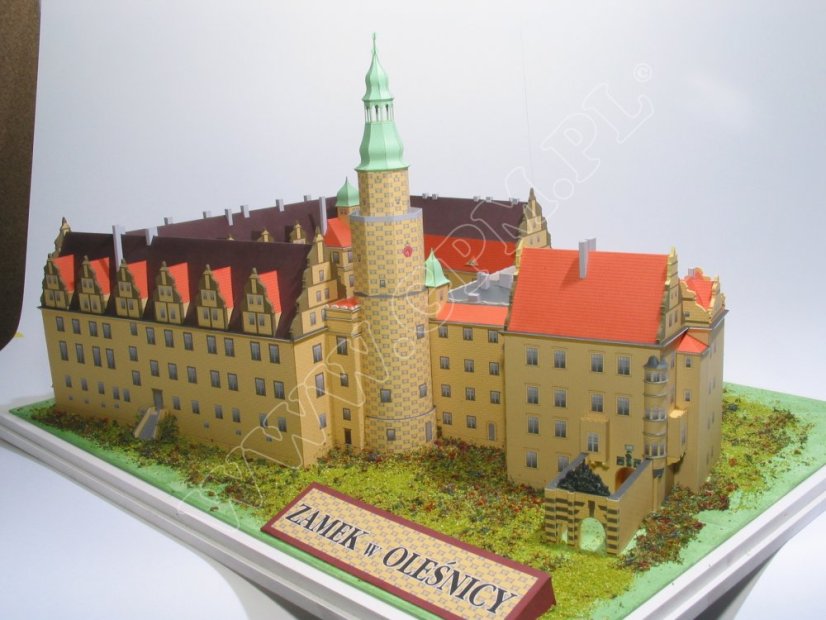
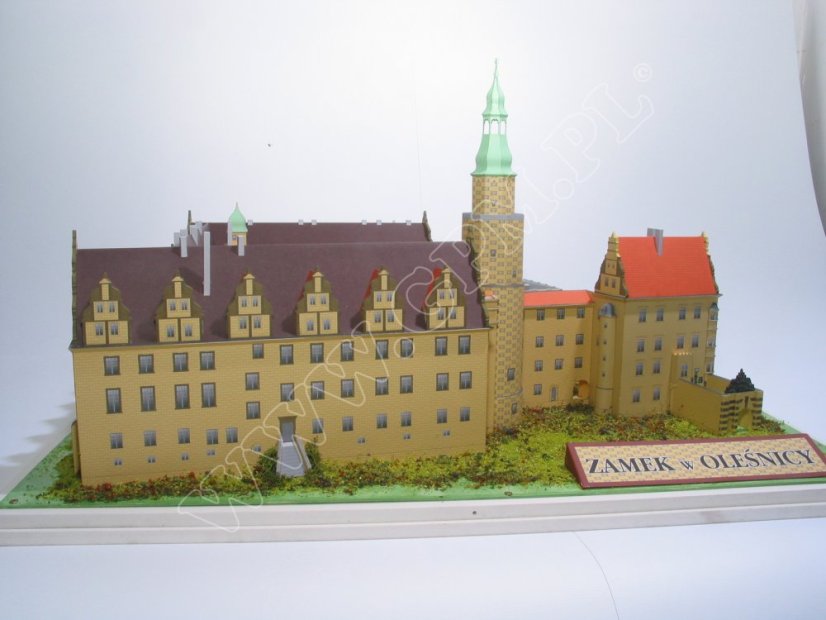
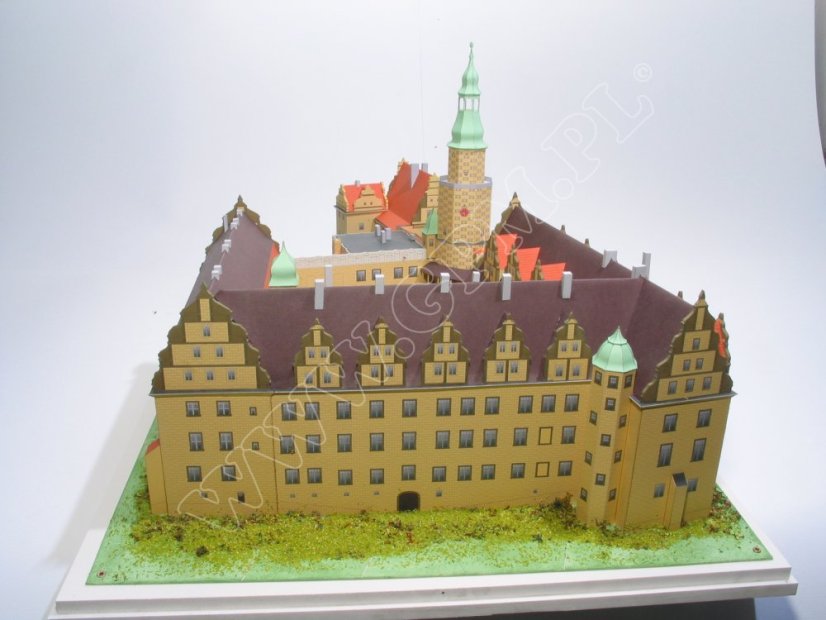
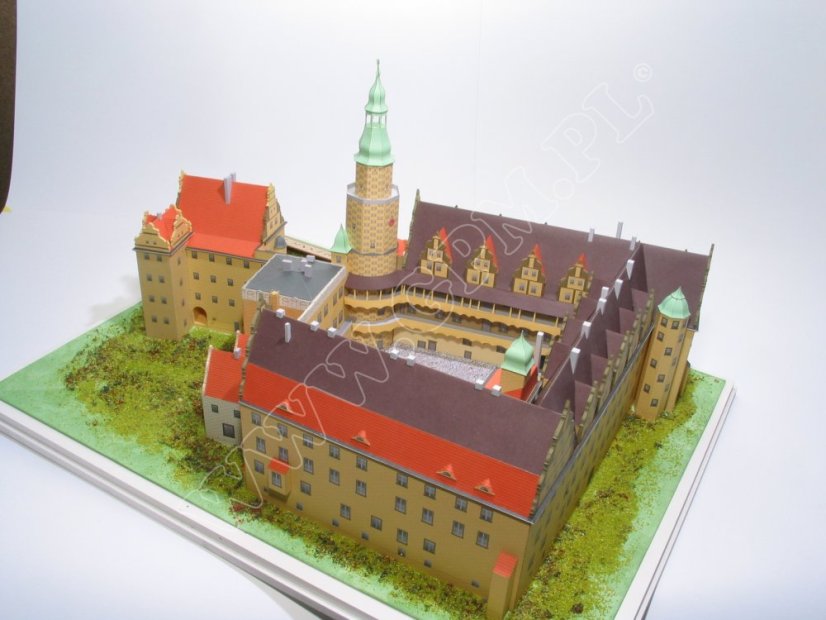
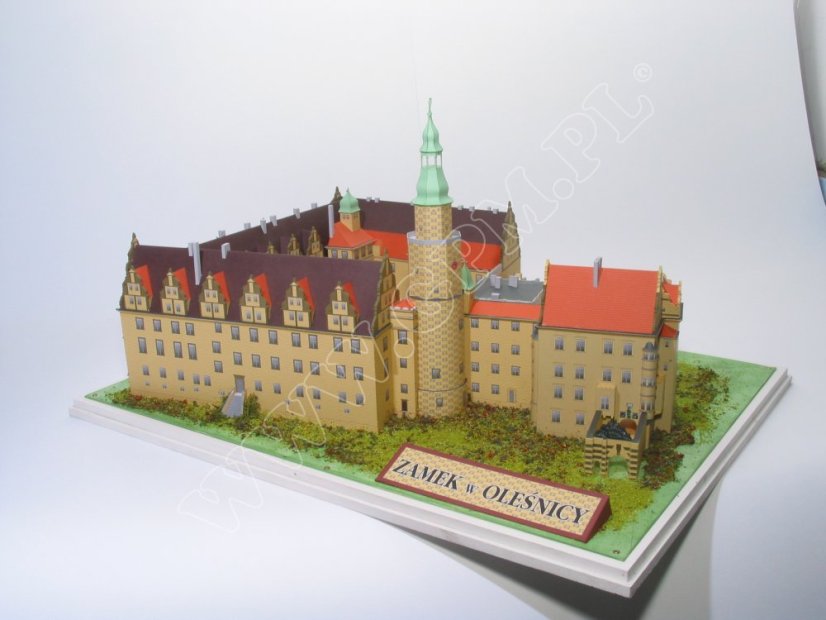
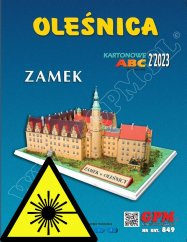
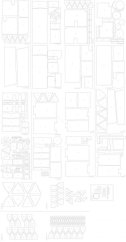
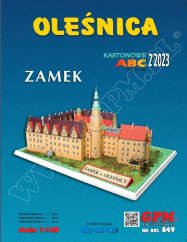
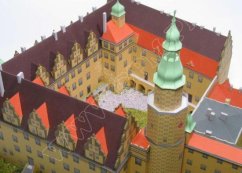
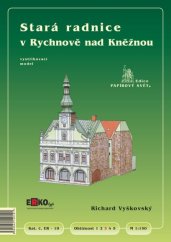
Paper model of Olesnica Castle. The die-cut is processed in a scale of 1:160.
Model dimensions: 60x50x40 cm
You can find all parameters for the model on the side tab. We provide the maximum amount of information for each model so that you can make the right decision about your purchase.
We also offer laser accessories for the paper model. These are skeleton and detail parts that will take your model to the next level and simplify your work.
The Prince's Castle in Oleśnica, also known as the Castle of the Princes of Oleśnica or simply the Castle in Oleśnica (German: Kronprinzliches Schloss, Piastenschloss zu Oels) - a historic Renaissance building in Oleśnica, erected on the site of a Gothic stronghold from the 13th century. The seat of the Princes of Oleśnica until the 19th century.
The defensive stronghold of the Piast dynasty of Oleśnica was first mentioned in 1239, while the first record of the castle comes from 1292. The construction was probably initiated by Konrad I of Oleśnica, but the castle's heyday falls on the descendants of the Czech king George of Poděbrady, who took possession of the Duchy of Oleśnica after the local Piast line died out. The first owner was Henry I the Older of Poděbrady, and after his death his sons: Albrecht, George I and Charles I. The son of the latter - John of Poděbrady, began a major reconstruction of the castle and built the so-called front castle, also known as the Widows' Palace. Charles II of Poděbrady gave the castle its current shape. He built the eastern wing, Renaissance cloisters, and the southern wing. Subsequent extensions and reconstructions turned it into a Renaissance residence. After the extinction of the Poděbrady line, the Duchy of Oleśnica was taken over by the Württembergs, who owned the castle until 1792, and then the Welfs until 1884. At the end of the 19th century, the castle became a fief of the Hohenzollern throne, who carried out a thorough renovation of the castle, which was the family's summer residence until 1945. After World War II, Hungarian and Italian prisoners of war were held in the surviving buildings. Later, a branch of the Soviet International Red Cross was located there, and then a Construction Technical School. In the years 1970–1990, the castle housed a local branch of the Archaeological Museum in Wrocław. From 1975 to 1993, the castle housed the Central School of Instructors of the Polish Scouting Association. In 1993, the castle became the property of the Main Command of the Voluntary Labor Corps.
The castle is part of the European Route of Castles and Palaces.